
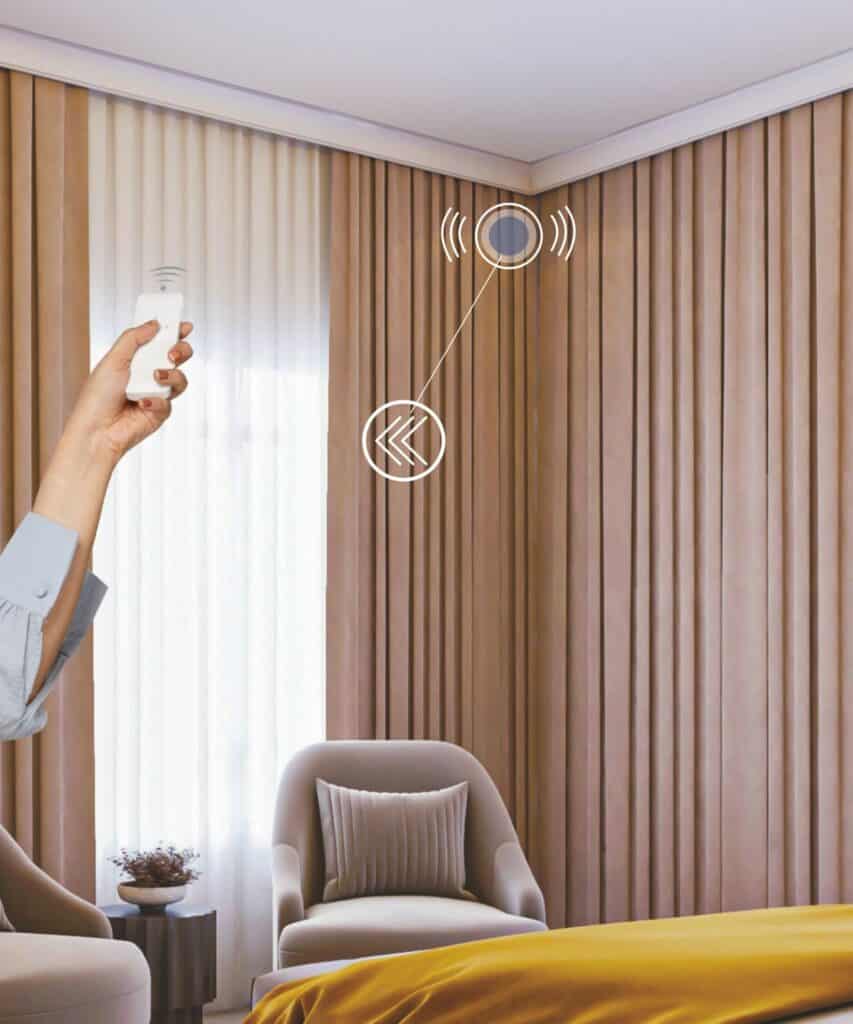
The motor behind an automated curtain rarely gets attention until something goes wrong. Yet it determines how the curtain moves, how the system receives power, and how easily the installation fits into the room. For wave curtain tracks, choosing between a wired and wireless motor can affect both the appearance and long term practicality of the window treatment.
Both options can provide smooth automated movement. The better choice depends on the property, electrical planning, curtain size, and level of smart control required.
How Wired Curtain Motors Work
A wired motor receives electrical power through a permanent connection. The wiring typically runs from the motor to a suitable power source, keeping the system continuously supplied without relying on rechargeable batteries.
This arrangement offers several advantages:
- Continuous power: The motor doesn’t depend on battery capacity for everyday operation.
- Consistent performance: Regular opening and closing doesn’t require battery monitoring.
- Suitable for large curtains: Larger fabric panels can benefit from a permanent power source.
- Neater long term operation: Once installed correctly, there’s no need to remove the motor for charging.
- Good for new construction: Wiring can often be concealed during electrical and interior work.
The main consideration is installation. Electrical points and cable routes need to be planned before the finishing stages.
How Wireless Curtain Motors Work
Wireless motors reduce the need for permanent electrical wiring at the curtain track. Depending on the system, the motor may use a rechargeable battery or communicate wirelessly with a remote, hub, or smart home controller.
This approach can simplify installation in finished spaces.
Key benefits include:
- Less structural disruption: Installation can avoid extensive cable routing.
- Flexible placement: Curtain tracks can be installed where adding new wiring would be difficult.
- Useful for renovations: Existing interiors don’t necessarily need major electrical modifications.
- Remote operation: Compatible systems can provide control without a traditional wall switch.
- Cleaner installation process: Fewer visible cables can help preserve the appearance of finished interiors.
Battery-powered systems do require periodic charging, so accessibility should be considered before installation.
Wired vs Wireless: Which Fits Better?
Neither system is automatically better for every window. The right decision depends on how the room is built and how frequently the curtains will operate.
Consider these practical differences:
- Power: Wired motors have continuous electrical supply, while battery systems need recharging.
- Installation: Wireless options can be easier to add to completed interiors.
- Maintenance: Wired systems generally remove the need for battery charging.
- Renovation: Wireless motors can be convenient when walls and ceilings are already finished.
- Large windows: Heavy or frequently used curtains may favour a permanent power solution.
- Design flexibility: Both can provide discreet installations when properly planned.
For wave curtains dubai installations, the property’s existing electrical layout can be just as important as the curtain design itself.
When Wired Motors Make More Sense
A wired system often works well when automation forms part of the original interior plan. During construction or renovation, electricians can position power points close to the curtain tracks and conceal the necessary wiring.
It can be particularly suitable for:
- Large living room windows: Frequent operation benefits from uninterrupted power.
- High curtain tracks: Permanent power eliminates the need to access a high-mounted battery.
- Multiple curtain panels: Several automated tracks can be incorporated into a coordinated electrical plan.
- Luxury villas: New-build projects provide greater freedom for concealed wiring.
- Commercial spaces: Regular operation can make permanent power more practical.
Planning the electrical connection early usually produces the cleanest result.
When Wireless Motors Make More Sense
Wireless systems become attractive when the room is already finished and adding electrical wiring would involve unnecessary disruption. They can also work well where a power outlet isn’t conveniently positioned near the curtain track.
They may suit:
- Apartments: Installation can be simpler when major electrical changes aren’t desirable.
- Renovated rooms: Existing walls and ceilings can remain largely untouched.
- Rental properties: Less invasive installation may be preferable.
- Secondary windows: Less frequently operated curtains may work well with rechargeable systems.
- Flexible layouts: Wireless control can simplify changes to the room’s automation setup.
Battery life varies by motor, curtain weight, usage frequency, and manufacturer specifications, so these factors should be checked before choosing a system.
Smart Controls and Motor Compatibility
The motor itself isn’t the only decision. Modern curtain systems can connect with remotes, wall controls, smartphone applications, and selected smart home platforms. Compatibility needs attention before installation because not every motor supports every control method.
Check these points before committing to a system:
- Control method: Decide whether you prefer remote, wall, app, or voice operation.
- Smart compatibility: Confirm support for your preferred home automation platform.
- Curtain weight: Match the motor’s capacity to the complete fabric and track system.
- Track length: Wider windows may require specific motor and track configurations.
- Power access: Determine whether permanent electricity or battery operation is more practical.
Motorized curtains perform best when the mechanical and electronic components are selected as one complete system.
Making the Right Choice for Your Space
The decision between wired and wireless motors shouldn’t start with the motor alone. Look at the window, fabric, track position, electrical access, construction stage, and expected usage together.
Wired motors make strong sense when permanent power can be concealed easily. Wireless motors offer greater flexibility when working with an existing finished interior. Neither approach compromises the clean appearance that makes wave curtain tracks attractive when the system is properly installed.
A well-planned solution should operate smoothly, remain discreet, and suit the way the room is actually used. That’s the real measure of a successful automated curtain system.