
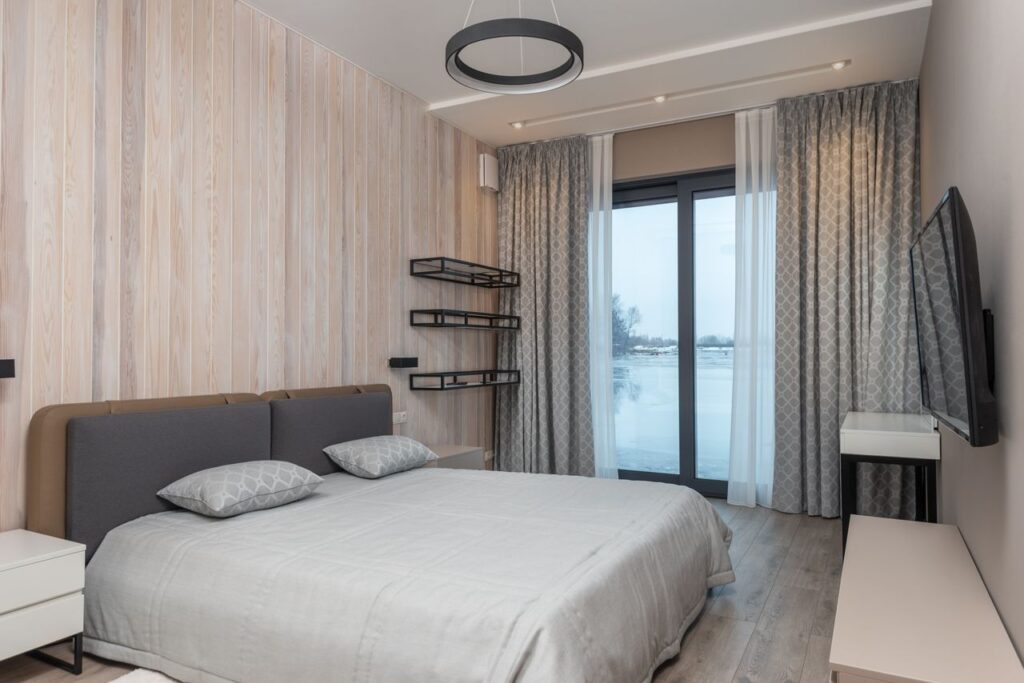
The shape of a curtain can change how an entire room feels. Wave curtains stand out because their fabric forms smooth, continuous folds instead of traditional gathered pleats. The result is a clean window treatment that works particularly well with contemporary interiors, generous glazing, and minimalist furniture. For Dubai homes, where large windows and bright interiors are common, this style combines a refined appearance with practical control over light and privacy.
What Are Wave Curtains?
Wave curtains use a specially designed track and curtain heading that creates evenly spaced S-shaped folds. Unlike conventional curtains, the fabric doesn’t bunch tightly at the top. Each fold follows the next in a consistent rhythm, creating an uncluttered appearance whether the curtains are open or closed.
This construction also allows the curtain to move smoothly along the track. The finished look depends on accurate measurements, suitable fabric fullness, and correct track positioning.
- S-shaped folds create a continuous, flowing appearance.
- Special gliders maintain consistent spacing between folds.
- The design works with both sheer and heavier fabrics.
- Tracks can be installed on ceilings or walls.
- The clean profile suits contemporary architectural styles.
Why Wave Curtains Suit Dubai Homes
Modern Dubai residences often feature wide windows, tall glazing, open-plan layouts, and sliding glass doors. Wave curtains complement these features without adding visual heaviness. Their regular folds create softness while maintaining the architectural lines of the room.
They can also address everyday concerns that come with extensive glazing. A suitable fabric can filter strong daylight, improve privacy, and make a room feel more comfortable without sacrificing the visual appeal of large windows.
- Sheer fabrics soften intense daylight while retaining brightness.
- Blackout materials offer stronger privacy and light reduction.
- Full-height installations can make ceilings appear taller.
- The style suits apartments, villas, and contemporary townhouses.
- Smooth folds complement minimalist furniture and modern finishes.
Choosing the Right Wave Curtain Fabric
Fabric selection has a bigger effect than many homeowners expect. A lightweight sheer produces an airy appearance, while a denser material gives the window a richer and more substantial finish. The right choice depends on the room, direction of sunlight, desired privacy, and existing colour scheme.
For a bedroom, stronger light control may take priority. Living spaces may benefit from sheers or layered treatments that keep the room bright during the day.
- Sheer fabrics work well where filtered daylight is preferred.
- Blackout fabrics suit bedrooms and rooms requiring stronger light control.
- Neutral tones can blend easily with contemporary interiors.
- Heavier fabrics create a more substantial visual presence.
- Fabric weight should match the curtain track and intended movement.
Where to Use Wave Curtains at Home
Wave curtains aren’t limited to standard windows. Their continuous movement makes them particularly effective across wide openings, where traditional pleats can appear bulky. They can frame a large window neatly or span a sliding glass door without interrupting the room’s visual flow.
The style works best when the installation is planned alongside the room’s architecture rather than treated as an afterthought.
- Living rooms can use them to soften expansive glazing.
- Bedrooms can combine them with blackout fabrics for privacy.
- Dining areas can benefit from their understated appearance.
- Sliding doors can be covered with wide, smoothly moving panels.
- Floor-to-ceiling installations enhance tall windows and open interiors.
Wave Curtain Tracks and Installation
The track is central to the wave curtain system. It controls the spacing, movement, and overall consistency of the folds. A poorly positioned track can make even premium fabric look uneven, so measurements and installation deserve careful attention.
Ceiling-mounted tracks create a particularly streamlined appearance because the hardware becomes less noticeable. Wall-mounted systems can work well where ceiling installation isn’t practical.
- Measure the complete window opening before selecting the track.
- Allow enough stacking space when curtains are fully open.
- Consider ceiling mounting for a cleaner architectural effect.
- Check the track length against the curtain’s required movement.
- Professional fitting helps maintain consistent wave spacing.
How to Choose Wave Curtains for a Modern Interior
Start with the room rather than the curtain itself. Consider how much sunlight enters, how much privacy you need, and whether the window faces a prominent outdoor area. Then look at fabric, colour, track position, and the amount of wall space available.
For homeowners comparing wave curtains dubai options, the best choice isn’t necessarily the thickest or most decorative fabric. A well-matched system should support the room’s function while keeping the window visually balanced.
- Match fabric density to the room’s light requirements.
- Choose colours that complement walls, flooring, and furniture.
- Consider motorized operation for large or frequently used curtains.
- Use full-height positioning when the room benefits from vertical emphasis.
- Check maintenance requirements before finalising the fabric.
Conclusion
Wave curtains offer a distinctive combination of orderly folds, smooth movement, and contemporary styling. Their appeal comes from restraint: the fabric frames a window without competing with the rest of the interior. With the right material, track, measurements, and installation, they can suit everything from compact apartments to expansive Dubai villas while providing practical control over light and privacy.