The amount of fabric behind a curtain can change its entire appearance. Single wave and double wave curtains use the same basic idea of continuous S-shaped folds, but they differ in fullness, visual depth, and the amount of fabric required. For Dubai homes, where wide windows and tall glass doors are common, understanding this distinction helps you choose a treatment that looks balanced rather than unnecessarily heavy.
What Is a Single Wave Curtains?
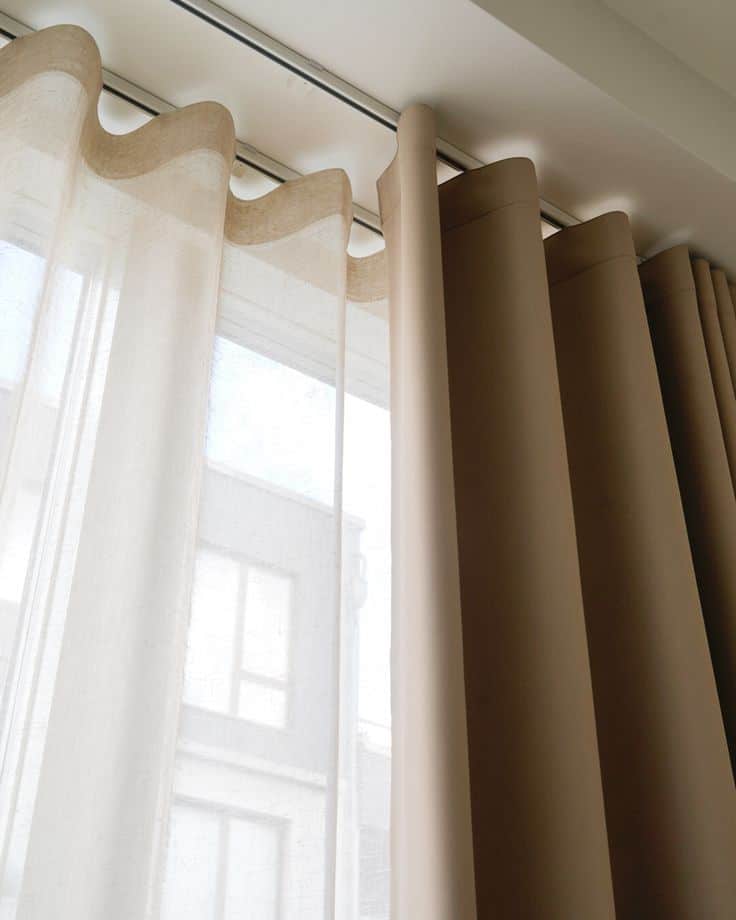
A single wave curtain uses one layer of fabric arranged into evenly spaced waves across the track. The folds are relatively relaxed, creating a clean appearance without excessive fabric gathering. This option can work particularly well when the goal is to maintain an airy, understated look.
Single wave systems can also be practical when the curtain needs to stack neatly beside a window or door. The final appearance depends on the selected fabric, track spacing, and installation dimensions.
- Uses one continuous curtain layer.
- Creates evenly spaced S-shaped folds.
- Requires less fabric than a fuller wave treatment.
- Offers a lighter visual appearance.
- Works well with sheer and lightweight fabrics.
What Is a Double Wave Curtains?
A double wave curtain uses greater fabric fullness to create a denser sequence of folds. Although the wave pattern remains continuous, the additional material gives the curtain a richer and more substantial appearance.
This doesn’t necessarily mean two separate curtain layers. The term generally refers to the fullness or density of the wave formation, depending on the curtain system being specified. Always confirm the exact construction with the installer before ordering.
- Uses more fabric fullness.
- Creates a denser visual wave pattern.
- Produces a richer drape.
- Can provide greater visual softness around large windows.
- Requires more careful planning for stacking space.
Single Wave vs Double Wave: The Main Difference
The biggest distinction is fabric fullness. A single wave uses a more restrained amount of material, while a double wave creates deeper visual density. This difference becomes noticeable when the curtains are closed because the fabric occupies more space across the window.
For minimalist Dubai interiors, a single wave can preserve a clean architectural feel. A double wave may suit rooms where the curtains are intended to feel more luxurious and prominent.
- Single wave offers a simpler appearance.
- Double wave creates fuller folds.
- Single wave generally needs less fabric.
- Double wave requires more stacking consideration.
- Both can use compatible manual or motorized track systems.
Which Wave Style Suits Large Dubai Windows?
Large glazing requires more than simply increasing curtain width. The folds need enough room to stack without blocking too much of the glass when the curtains are open. This makes the relationship between fullness, track length, and available wall space particularly important.
For homeowners comparing wave curtains dubai options, the window’s proportions should guide the choice. A broad living-room opening may accommodate a fuller treatment, while a narrow balcony door may benefit from a lighter wave arrangement.
- Measure the complete track area before selecting fullness.
- Check available stacking space beside the opening.
- Consider whether the curtains need to clear the glass completely.
- Match fabric weight with the chosen fullness.
- Plan large installations around the room’s furniture layout.
How Fabric Changes the Result
The same wave configuration can look dramatically different in different fabrics. A lightweight sheer naturally creates a softer, more delicate appearance, while a heavier blackout material produces stronger folds and greater visual presence.
Colour matters too, but texture and weight often have a bigger impact on how full the curtains appear. Sampling the actual fabric with the proposed heading is more reliable than judging a small colour swatch alone.
- Lightweight fabrics create softer-looking waves.
- Heavier fabrics produce stronger visual definition.
- Sheers can maintain a bright, open atmosphere.
- Blackout fabrics provide stronger privacy and light control.
- Textured materials can make the folds more noticeable.
How to Choose the Right Wave Fullness
Think about the room’s purpose, window dimensions, fabric, and available space before deciding between single and double wave. A homeowner seeking a subtle window treatment may prefer a single wave, while someone wanting a more luxurious drape may favour greater fullness.
Urban Shades can help assess these factors together, particularly for large windows where fabric requirements and stacking space need careful coordination.
- Choose single wave for a restrained, contemporary look.
- Consider double wave for a richer and fuller appearance.
- Check fabric weight before finalising the system.
- Allow sufficient stacking room beside wide windows.
- Consider motorization for large or frequently operated curtains.
Conclusion
Single and double wave curtains share the same flowing fold concept, but their fabric fullness creates different visual results. Single wave treatments feel lighter and more understated, while double wave arrangements provide greater density and softness. Neither option is automatically better. The right choice depends on the window, fabric, room proportions, and desired aesthetic. Urban Shades can help homeowners balance these details so the finished curtain looks intentional and performs well within the space.